

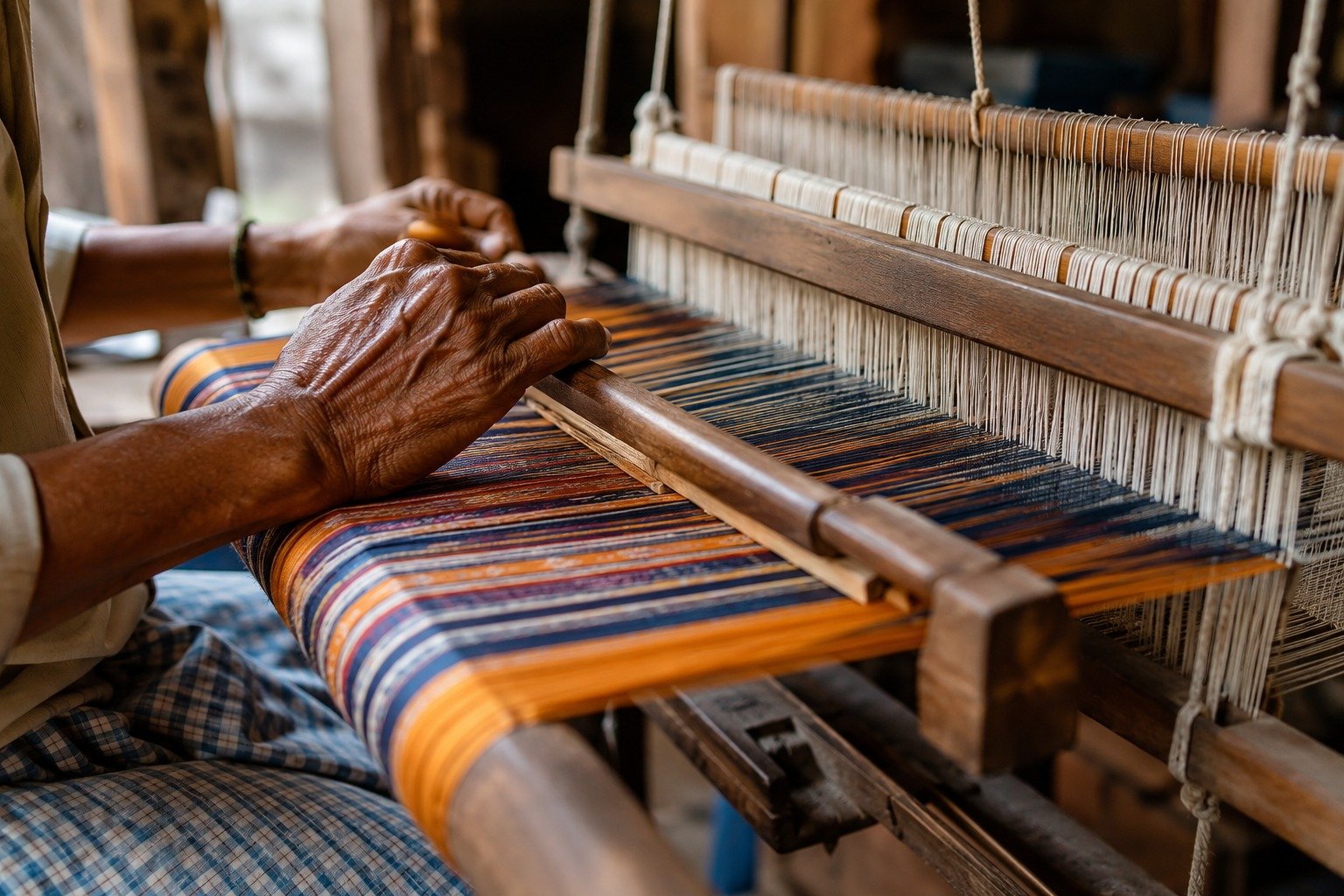
There is something strangely reassuring about watching a handloom at work.
The shuttle moves back and forth with quiet precision. The wooden frame creaks gently as the weaver settles into a rhythm perfected over decades. Every few minutes, the growing fabric is examined with an experienced eye. A loose thread is corrected. A motif is aligned. Nothing is rushed because it cannot be rushed.
Long before the saree reaches your wardrobe, it has already passed through hundreds of careful decisions made by skilled hands.
That is the difference between a handloom saree and almost everything else in today’s fashion industry. In an age where trends change every few weeks and garments are often discarded after a handful of wears, a handloom saree represents something increasingly rare. Patience. Skill. Authenticity. It is made to last, not simply to sell.
India’s handloom heritage is among the oldest and most diverse in the world, yet many buyers still struggle to distinguish a genuine handwoven saree from a machine-made imitation. Understanding the difference isn’t just about making a better purchase. It’s about recognising the craftsmanship, culture and communities that have kept this tradition alive for centuries.
Whether you’re buying your first handloom saree or looking to build a meaningful collection, this guide will help you appreciate what makes these weaves truly special.
What Exactly Is a Handloom Saree?
A handloom saree is woven on a manually operated loom by skilled artisans without the use of automated weaving machines.
While certain preparatory stages such as dyeing yarn or winding bobbins may use modern equipment, the weaving itself is completed by hand. Every thread is interlaced through the experience, concentration and craftsmanship of the weaver.
This process creates something machines cannot.
Individuality.
Unlike factory-produced fabrics where thousands of metres look identical, every authentic handloom saree carries subtle variations in texture or weave. These are not imperfections. They are the natural signatures of human craftsmanship.
Each saree is unique because no two artisans weave in exactly the same way.
Why Are Handloom Sarees So Special?
The answer lies beyond colours, borders or motifs. A handloom saree represents time.
Depending on its complexity, a single saree may take several days or even weeks to weave. Some intricate silk sarees require multiple artisans working together to complete one piece.
It also represents knowledge. Many weaving families have practised the same craft for generations. Techniques are taught at home, refined over decades and preserved through lived experience rather than textbooks.
Most importantly, a handloom saree carries a sense of permanence.
Unlike garments designed to follow short-lived trends, authentic handwoven sarees are created to remain relevant for years. They become part of weddings, festivals, family celebrations and often, treasured heirlooms passed from one generation to the next.
A Heritage Woven Across India
India’s relationship with handloom weaving stretches back thousands of years. Ancient travellers wrote about Indian cottons and silks long before textile manufacturing became industrialised elsewhere in the world.
Over time, every region developed its own weaving traditions, shaped by local materials, climate, culture and craftsmanship.
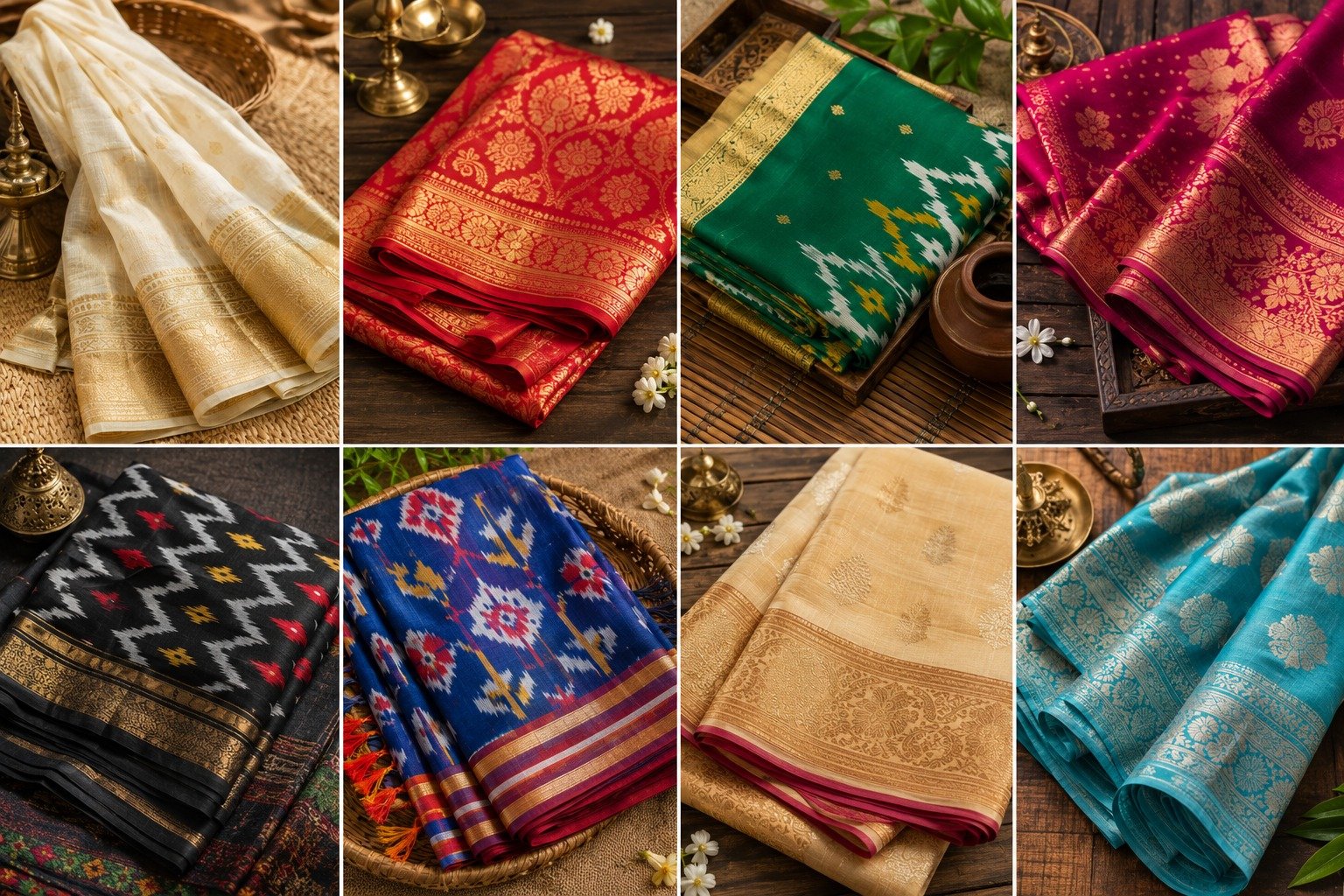
Some of India’s most celebrated handloom sarees include:
- Banarasi from Uttar Pradesh, known for luxurious silk weaving and intricate zari work.
- Chanderi from Madhya Pradesh, admired for its lightweight texture and understated elegance.
- Maheshwari from Madhya Pradesh, recognised for reversible borders and geometric designs.
- Jamdani from West Bengal, where delicate motifs are woven directly into the fabric.
- Kora Silk from Banaras and West Bengal, appreciated for its crisp texture and graceful drape.
- Kanjeevaram from Tamil Nadu, celebrated for richly woven mulberry silk and vibrant contrasting borders.
- Chettinad Cotton from Tamil Nadu, known for bold colours, striking checks and exceptional comfort.
- Molakalmuru Sarees from Karnataka, woven with fine silk and elegant zari detailing.
- Pochampally Ikat from Telangana, famous for its intricate geometric dyeing techniques.
- Gadwal Sarees from Telangana, combining lightweight cotton bodies with luxurious silk borders.
- Uppada Jamdani from Andhra Pradesh, admired for its airy weave and intricate craftsmanship.
Each weave reflects the identity of the community that created it.
Together, they make India’s handloom tradition one of the richest textile legacies anywhere in the world.
Over the coming weeks, we’ll explore many of these weaving traditions in greater depth, beginning with the stories, techniques and artisans behind each weave.
How Is a Handloom Saree Made?
Although every weaving tradition follows its own methods, the journey usually begins long before the first thread reaches the loom. The yarn is carefully selected based on the fabric being created. It may be silk, cotton, linen, banana fibre or another natural material. Once dyed, thousands of threads are prepared and arranged on the loom, a painstaking process that can take several days for intricate designs.
Only then does the weaving begin. The artisan passes the shuttle repeatedly across the loom, interlacing horizontal and vertical threads while carefully building motifs one row at a time. Every colour change, every border and every pattern requires complete concentration.
Unlike machine production, there is no shortcut. If a mistake occurs, the artisan often has to correct it manually before continuing.
This is why an authentic handloom saree can never be replicated at industrial speed.
Why Do Handloom Sarees Cost More?
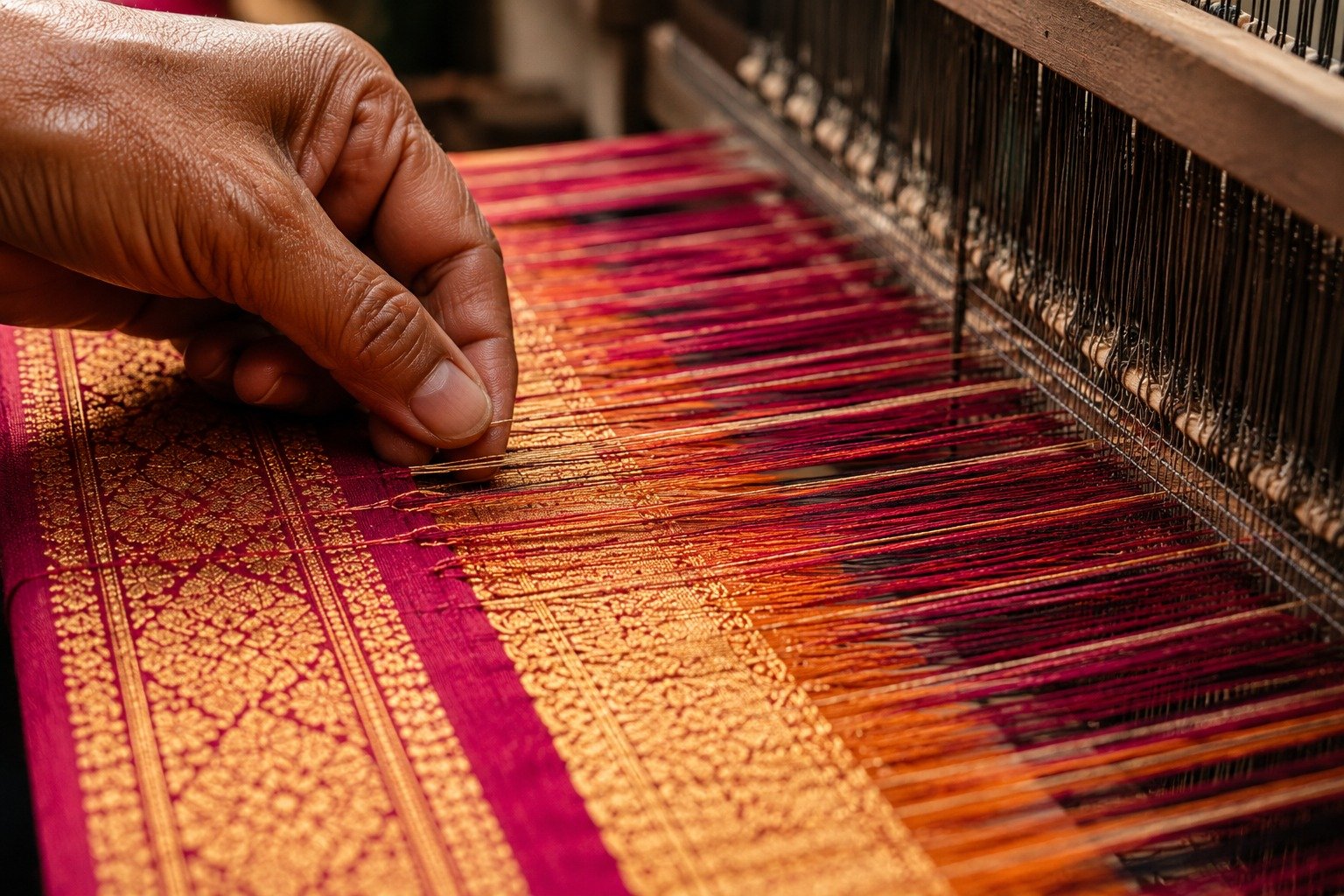
One of the most common misconceptions is that a higher price simply reflects branding. In reality, much of the cost reflects the time and skill required to create the fabric itself.
A powerloom can produce metres of fabric in a fraction of the time. A handloom depends entirely on the artisan’s experience. Complex motifs, fine silk yarns and detailed borders significantly increase weaving time.
The result is not just another saree. It is a piece of craftsmanship that cannot be mass-produced. Viewed over years rather than a single purchase, many handloom sarees offer exceptional value because they remain beautiful, wearable and relevant for generations.
Handloom vs Powerloom Sarees
At first glance, the difference may seem subtle. A closer look tells another story.
| Handloom Sarees | Powerloom Sarees |
| Woven manually by skilled artisans | Produced using automated machines |
| Every saree is naturally unique | Uniform, identical production |
| Created in limited quantities | Manufactured at large scale |
| Supports traditional craftsmanship | Prioritises production speed |
| Often lasts for decades with proper care | Durability depends on manufacturing quality |
Powerloom fabrics certainly have their place, especially when affordability and volume are priorities. Handloom, however, belongs to a different philosophy altogether. It values craftsmanship over speed, individuality over uniformity and longevity over convenience.
Behind the Loom: Choosing Craft Over Convenience
The conversation around fashion is beginning to change.
For years, the industry encouraged people to buy more, wear less and replace clothing as trends shifted. This cycle made fashion faster, but it also made it disposable.
Handloom stands for the opposite. A handwoven saree isn’t created with the expectation that it will be replaced next season. It is woven to become part of someone’s life for years, sometimes decades.
This philosophy also extends to the people behind the loom. Many large retailers purchase in bulk and negotiate aggressively on price, leaving artisans with shrinking margins despite the extraordinary skill their work demands.
At Woh Chali, we believe preserving India’s weaving traditions begins with valuing the people who keep them alive. Rather than sourcing through long chains of intermediaries, we work towards building closer relationships with artisan communities, purchasing thoughtfully curated collections and paying fair prices for exceptional craftsmanship.
When unnecessary retail markups are removed instead of artisan earnings, everyone benefits. The customer receives an authentic handloom saree at honest value.
The artisan receives better recognition for their work. And one of India’s greatest cultural traditions has a stronger chance of thriving for generations to come.
Are Handloom Sarees Worth the Investment?
That depends on what you expect from your wardrobe. If you’re looking for something to wear a few times before replacing it with the next trend, a handloom saree may not be the right choice.
Handloom belongs to a different philosophy of dressing. It values thoughtful purchases over impulse buying. Quality over quantity. Craftsmanship over convenience.
Fast fashion has transformed the way people consume clothing. Collections change rapidly, garments are produced in enormous volumes and low prices encourage frequent purchases. While this has made fashion more accessible, it has also contributed to a culture where clothing is often treated as disposable.
A handloom saree asks us to slow down.
It invites us to own fewer pieces that we genuinely value. Every weave carries hours of skilled labour, traditional knowledge and cultural heritage. It deserves to be worn repeatedly, cared for thoughtfully and appreciated for years rather than seasons.
The true value of a handloom saree isn’t measured by its price tag. It’s measured by how long it remains relevant, how beautifully it ages and the memories it gathers over time.
Many women still treasure sarees worn by their mothers and grandmothers at weddings, festivals and family celebrations. That emotional connection is difficult to recreate with garments designed to follow fleeting trends.
Choosing handloom is not simply a style decision. It is a conscious decision to invest in craftsmanship, preserve traditional skills and reduce the cycle of unnecessary consumption.
How Can You Identify an Authentic Handloom Saree?
As interest in handloom grows, so does the number of products marketed as “handcrafted” or “handloom-inspired.” Knowing what to look for can help you make an informed purchase.
Start by examining the weave closely. Genuine handloom sarees often display tiny irregularities in texture or alignment. These are natural characteristics of manual weaving and should not be mistaken for flaws. Turn the saree over and inspect the reverse side. Intricate woven motifs usually reveal thread work rather than printed designs or fused patterns.
If you’re purchasing a silk saree, check whether it carries recognised certifications such as the Silk Mark. Many authentic handloom products also feature the Handloom Mark, which helps identify genuine handwoven textiles.
Equally important is the seller’s transparency. A trustworthy brand should be able to tell you where the saree was woven, which weaving tradition it belongs to and what materials have been used. Authentic craftsmanship has a story. Sellers who value handloom are usually proud to share it.
Caring for Your Handloom Saree
A well-made handloom saree can last for decades if looked after properly.
- Store it in a cool, dry place wrapped in a soft muslin or cotton cloth rather than plastic covers, which can trap moisture.
- Refold the saree every few months to prevent permanent creases from forming along the same lines.
- Silk handloom sarees should generally be dry cleaned, while many cotton handloom sarees can be gently hand washed according to the weaver’s care instructions.
- Avoid spraying perfume directly onto the fabric, especially if it contains zari work. After wearing the saree, allow it to air naturally before storing it away.
These small habits help preserve both the fabric and its intricate craftsmanship for years to come.
The Future of Handloom Depends on the Choices We Make
India’s handloom tradition has survived for centuries because every generation found value in preserving it. Today, that responsibility belongs to us. Every time we choose an authentic handloom saree over a mass-produced alternative, we do more than support a single artisan. We help sustain weaving communities, encourage younger generations to continue traditional crafts and protect skills that cannot be replaced by machines.
This does not mean abandoning modern fashion. It simply means becoming more intentional about what we buy. A wardrobe built around timeless, well-crafted pieces often brings greater satisfaction than one filled with garments designed to be replaced within months.
Fashion should not only reflect personal style. It should also reflect our values. Handloom reminds us that beautiful clothing can be ethical, sustainable and deeply meaningful all at once.
The Woh Chali Perspective
At Woh Chali, we don’t see a handloom saree as a product waiting to be sold. We see it as the result of someone’s patience, experience and dedication.
Every collection we curate begins with the artisan. We work with weaving communities to source authentic handloom sarees in limited quantities, ensuring that craftsmanship remains the focus rather than mass production. By reducing unnecessary intermediaries instead of reducing artisan earnings, we aim to create a fairer journey from the loom to your wardrobe.
Our hope is simple. That every saree you choose becomes one you’ll reach for years from now. One that gathers compliments, memories and stories with every occasion.
Because true luxury isn’t defined by excess. It’s defined by authenticity, craftsmanship and the confidence that what you’re wearing has been made with care.
Conclusion
A handloom saree is more than six yards of fabric. It is history woven into thread, craftsmanship refined over generations and a reminder that some things are worth taking time to create.
In a world increasingly driven by speed, handloom offers something refreshingly different. It celebrates patience over haste, quality over quantity and enduring value over passing trends.
Whether you are beginning your handloom journey or expanding a collection you’ve cherished for years, understanding the story behind every weave makes each purchase more meaningful.
The next time you drape a handloom saree, remember that you are wearing far more than beautiful fabric. You are wearing the skill of an artisan, the legacy of a community and a tradition that has shaped India’s cultural identity for centuries.
At Woh Chali, we’re proud to celebrate these traditions through thoughtfully curated handloom sarees sourced directly from artisan communities across India.
Explore our collection and discover handloom sarees that are meant to be worn, treasured and passed on.
FAQs
- What is the difference between a handloom saree and a powerloom saree?
A handloom saree is woven manually by skilled artisans using traditional looms, making every piece slightly unique. Powerloom sarees are produced using electrically operated machines that prioritise speed and uniformity. Handloom sarees usually require significantly more time to create and often offer greater craftsmanship, individuality and cultural value.
- Why are handloom sarees more expensive?
Handloom sarees reflect the time, expertise and manual effort invested in weaving them. Depending on the design, a single saree may take several days or weeks to complete. The cost also supports skilled artisans, traditional weaving techniques and the use of high-quality natural fibres, making it an investment in craftsmanship rather than mass production.
- How can I identify an authentic handloom saree?
Examine the weave for slight natural irregularities, inspect the reverse side for woven motifs instead of printed designs, and look for recognised certifications such as the Handloom Mark or Silk Mark where applicable. Buying from transparent brands that openly share the weaving tradition and artisan community also helps ensure authenticity.
- Which Indian states are famous for handloom sarees?
India has numerous celebrated handloom traditions. Uttar Pradesh is known for Banarasi sarees, Madhya Pradesh for Chanderi and Maheshwari, Tamil Nadu for Kanjeevaram, Telangana for Gadwal and Pochampally Ikat, Andhra Pradesh for Uppada and Venkatagiri, Karnataka for Ilkal and Molakalmuru, Kerala for Kasavu, and West Bengal for Jamdani and Kora Silk.
- Are handloom sarees sustainable?
Yes. Handloom weaving consumes significantly less energy than industrial textile manufacturing because it relies on manually operated looms. Combined with their durability and long lifespan, handloom sarees encourage slower, more responsible fashion choices while helping preserve traditional artisan livelihoods.
