You spot a beautiful saree online.
The colours are stunning. The seller calls it pure handloom. The price seems surprisingly attractive. A few clicks later, it’s in your cart.
But here’s the question most buyers never ask.
Is it really handloom?
The truth is, identifying an authentic handloom saree has become more challenging than ever. As appreciation for handcrafted textiles has grown, so has the number of machine-made sarees marketed using words like handloom, handcrafted, handwoven-inspired and artisan style. To someone buying their first premium saree, they can all look remarkably similar.
They aren’t.
A genuine handloom saree carries something a machine cannot reproduce. Not just in the weave, but in the time, skill and human effort behind every thread.
Learning to recognise the difference isn’t about becoming a textile expert overnight. It’s about asking the right questions, noticing the details that matter and buying with confidence.
In this guide, we’ll walk you through the practical signs of an authentic handloom saree so you can make informed choices and truly appreciate the craftsmanship you’re investing in.
Why Identifying Authentic Handloom Matters More Than Ever
India’s handloom heritage is one of the richest in the world, but it also faces one of its biggest challenges.
Fast fashion has changed the way many people buy clothing. Trends move quickly, collections change every few weeks and price often becomes the deciding factor. To keep up with demand, factories can produce machine-made fabrics that closely resemble traditional handloom weaves at first glance.
There’s nothing inherently wrong with powerloom textiles. They make sarees more affordable and accessible for many buyers.
The problem begins when machine-made products are sold as handloom.
When that happens, customers unknowingly pay for something they didn’t intend to buy, while genuine artisans struggle to compete with imitations that take a fraction of the time to produce.
Choosing authentic handloom is about more than purchasing a beautiful saree. It’s about recognising skilled craftsmanship, preserving India’s weaving traditions and ensuring that the people behind the loom receive the value their work deserves.
What Makes a Saree Truly Handloom?
Before learning how to identify one, it’s worth understanding what the term actually means.
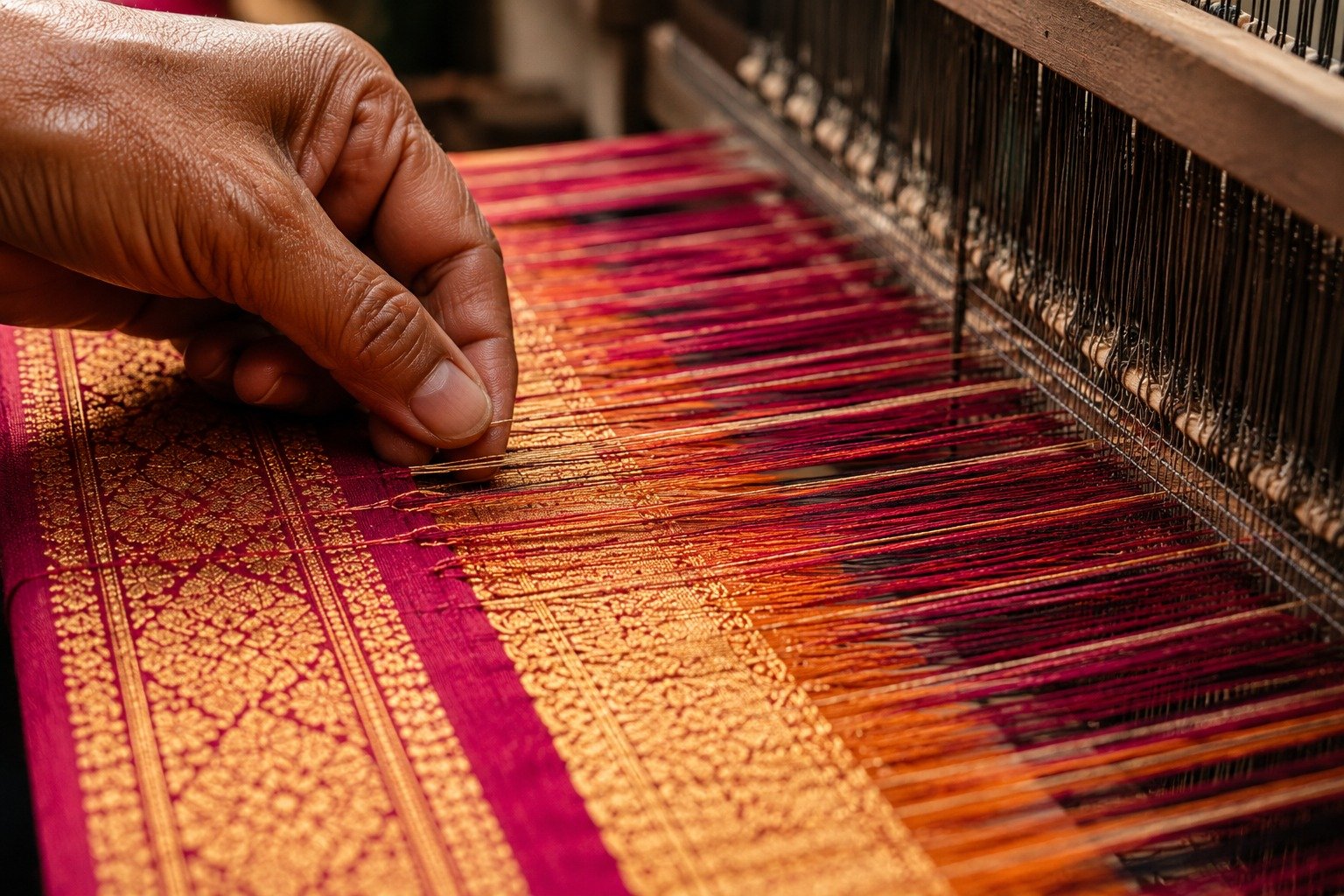
A handloom saree is woven manually on a traditional loom operated by a skilled artisan. Unlike automated weaving machines, every movement of the shuttle, every alignment of the threads and every motif is guided by human hands.
This process takes patience.
It takes precision.
Most importantly, it takes experience developed over years, sometimes generations.
Because the weaving is manual, every saree develops a personality of its own. Tiny variations in the weave are natural. They reflect craftsmanship rather than imperfection.
If you’d like to understand the weaving process in greater detail, read our guide on What Is a Handloom Saree? where we explore the history, artistry and significance of India’s handloom tradition.
Can You Tell the Difference Just by Looking?
Sometimes.
But not always.
An experienced textile collector can often recognise handloom from the texture, drape and weave within seconds. For most buyers, however, it isn’t that straightforward.
Modern weaving technology has become incredibly sophisticated. Many machine-made sarees are designed to imitate traditional handloom patterns with remarkable accuracy.
That is why relying on appearance alone can be misleading.
Instead of searching for one obvious clue, look for several smaller indicators that together reveal the story of the saree.
Here are the signs that experienced buyers pay attention to.
12 Ways to Identify an Authentic Handloom Saree
- Examine the Reverse Side
One of the easiest places to begin is the inside of the saree.
On authentic handwoven sarees, especially those with woven motifs, you’ll often notice the thread work that creates the design. The reverse side may not appear perfectly uniform because the motifs have been woven into the fabric rather than printed or chemically bonded.
While every weaving tradition is different, the reverse side often reveals far more than the front.
- Feel the Texture
Handloom fabrics have character.
Run the saree gently through your fingers. Whether it’s silk, cotton or linen, it should feel alive rather than overly synthetic or unnaturally smooth.
Different handloom traditions produce different textures. A crisp Kora Silk feels very different from a soft Chanderi or a rich Banarasi Katan. Understanding these natural differences comes with experience, but authentic handloom rarely feels identical to factory-produced fabric.
- Don’t Mistake Tiny Irregularities for Defects
This is one of the biggest misconceptions among first-time buyers.
Many people assume that perfect uniformity is a sign of better quality.
In reality, slight variations in thread thickness, weave density or motif alignment often indicate that a saree has been woven by hand.
Machines excel at producing identical repetition.
Human hands create individuality.
Those tiny differences are often the fingerprints of craftsmanship.
- Ask About the Weaving Technique
A genuine seller should be able to explain how the saree was woven.
Was it created using Jamdani weaving?
Is it a handwoven Banarasi?
Was it woven on a pit loom or a frame loom?
You don’t need to know every weaving method, but the willingness to share this information usually reflects transparency and respect for the craft.
- Look Beyond the Label
The word handloom printed on a tag isn’t enough.
Ask where the saree was woven.
Which artisan community created it?
What fibres have been used?
How long did it take to weave?
Authentic craftsmanship always comes with a story. Sellers who genuinely work with artisan communities are usually proud to share it.
In the next part, we’ll explore the remaining seven checks every buyer should know, including the importance of the Handloom Mark, Silk Mark, pricing myths and why transparency matters when choosing authentic handloom.
- Look for the Handloom Mark
One of the simplest ways to verify authenticity is by checking whether the saree carries the Handloom Mark, a certification introduced by the Government of India to help buyers identify genuine handwoven products.
While not every authentic handloom saree will necessarily have this label, especially those produced by smaller artisan groups, its presence offers added confidence that the fabric has been woven on a handloom.
Think of it as one piece of the puzzle rather than the only deciding factor.
- Check for the Silk Mark
If you’re buying a silk saree, look for the Silk Mark.
Issued by the Silk Mark Organisation of India, this certification verifies that the saree is made from genuine silk. It does not confirm whether the saree is handloom or powerloom, but it does assure buyers about the authenticity of the silk itself.
For silk handloom sarees, both the weaving method and the fibre matter.
- Ask Where the Saree Was Woven
Every authentic handloom saree has a place of origin.
It could come from the weaving lanes of Banaras, the looms of Chanderi, the silk clusters of Kanchipuram or the artisan communities of Uppada, Gadwal or Maheshwar.
Knowing where a saree was woven tells you far more than its geography. It reveals the techniques, traditions and communities behind it.
If a seller cannot tell you where the saree was woven or gives vague answers, treat it as a reason to ask more questions.
At Woh Chali, every collection is accompanied by information about its weaving tradition because we believe buyers deserve to know the story behind what they wear.
- If the Price Seems Too Good to Be True, Ask Why
Everyone loves finding a good deal.
But genuine handloom weaving is labour-intensive. Depending on the complexity of the design, a single saree may require days or even weeks of skilled work.
That doesn’t mean every authentic handloom saree has to be expensive.
Sometimes, brands that source directly from weaving families can offer better prices simply because they have removed unnecessary intermediaries from the supply chain.
This is the philosophy Woh Chali follows. Instead of squeezing artisan incomes to lower prices, we focus on reducing retail markups while paying weavers fairly for their craftsmanship.
The result is better value for customers without compromising the people behind the loom.
- Ask How Long It Took to Weave
This is one of the easiest questions buyers rarely ask.
An informed seller should have a reasonable understanding of the weaving process and the approximate time required to create the saree.
The answer won’t always be exact, but it should reflect the complexity of the weave.
Knowing the time invested in creating a saree often changes the way you look at its value.
- Buy From Brands That Value Transparency
The best brands don’t simply sell sarees.
They educate.
They tell you where the saree comes from, how it was woven, what materials have been used and why it deserves its place in your wardrobe.
Transparency builds trust.
When brands openly share the stories of their artisan partners, buyers gain confidence that they are investing in genuine craftsmanship rather than clever marketing.
This commitment to transparency is central to Woh Chali’s philosophy. Every saree we curate is selected not only for its beauty but also for the authenticity and craftsmanship it represents.
- Trust the Story, Not Just the Label
The easiest products to copy are labels.
The hardest thing to copy is authenticity.
A genuine handloom saree carries the story of its maker, its region and its weaving tradition. It reflects countless hours of skilled work that no factory can truly replicate.
When you know that story, you’re buying far more than fabric.
You’re investing in India’s living textile heritage.
Common Myths About Handloom Sarees
Let’s clear up a few common misconceptions.
Myth: Every expensive saree is handloom.
Reality: Price alone doesn’t guarantee authenticity. Luxury branding and premium fabrics can increase prices even for machine-made sarees.
Myth: Every Banarasi saree is handwoven.
Reality: Banarasi refers to a weaving tradition and region. Today, both handloom and powerloom Banarasi sarees are available.
Myth: Slight irregularities mean poor quality.
Reality: Small variations are often signs of genuine hand craftsmanship.
Myth: Handloom is old-fashioned.
Reality: Handloom is timeless. Contemporary designers continue to reinterpret traditional weaves for modern wardrobes while preserving the techniques that make them unique.
Handloom Wisdom
If every motif, thread and border looks perfectly identical, take a closer look.
Machines are built to repeat.
Human hands are not.
Some of the most beautiful handloom sarees carry tiny variations that quietly remind us they were created by an artisan, not an assembly line.
Behind the Loom: Why Transparency Matters
When we lose sight of who made our clothes, we also lose appreciation for the skill behind them.
Traditional weaving is not just a profession. For many families, it is a legacy passed from one generation to the next.
Every time a genuine handloom saree is purchased with awareness, it sends a powerful message that craftsmanship still matters.
At Woh Chali, we believe that preserving India’s weaving traditions begins with recognising the artisans behind every weave. Our role is not simply to curate beautiful sarees but to help reconnect buyers with the people, places and traditions that make each piece extraordinary.
The Woh Chali Perspective
The easiest way to buy a saree is to choose the one with the brightest colours or the biggest discount.
The more meaningful way is to ask a simple question.
Who made this?
When you begin asking that question, you start seeing clothing differently.
A handloom saree stops being just another purchase. It becomes a celebration of craftsmanship, heritage and human skill.
That is the journey we hope every Woh Chali customer experiences. Not simply buying fewer sarees, but choosing better ones. Sarees that will still be loved years from now because they were made with care, not speed.
Conclusion
Identifying an authentic handloom saree isn’t about memorising technical details.
It’s about becoming a more informed buyer.
Look beyond labels. Ask questions. Learn about the weaving tradition. Understand the story behind the fabric.
The more you know, the easier it becomes to recognise genuine craftsmanship.
And when you choose authentic handloom, you’re doing more than adding another saree to your wardrobe. You’re helping preserve centuries of Indian weaving traditions, supporting artisan communities and embracing a slower, more thoughtful approach to fashion.
The next time you shop for a saree, don’t just ask whether it looks beautiful.
Ask whether it has a story worth wearing.
FAQs
- How can I identify an authentic handloom saree?
An authentic handloom saree is woven manually by skilled artisans rather than produced on automated machines. Look for subtle variations in the weave, woven motifs on the reverse side, and certifications such as the Handloom Mark or Silk Mark where applicable. A trustworthy seller should also be able to explain the saree’s origin, weaving technique and artisan community. These details together provide greater confidence than relying on appearance alone.
- What is the Handloom Mark and why is it important?
The Handloom Mark is a certification introduced by the Government of India to help consumers identify genuine handwoven products. While not every authentic handloom saree carries the mark, especially those produced by smaller artisan groups, it serves as an additional assurance that the fabric has been woven on a traditional handloom rather than a powerloom.
- What is the difference between the Handloom Mark and the Silk Mark?
The Handloom Mark verifies that a product has been woven on a handloom, whereas the Silk Mark certifies that the fabric is made from genuine natural silk. A silk saree may carry a Silk Mark but still be woven on either a handloom or a powerloom. When buying a premium silk handloom saree, it is helpful to understand both certifications.
- Why do authentic handloom sarees cost more?
Handloom sarees require significant time, skill and manual effort to create. Depending on the complexity of the design, a single saree may take several days or even weeks to weave. The price reflects the craftsmanship involved, the quality of natural fibres and the livelihoods of artisan communities rather than mass production or fast-fashion economics.
- Can machine-made sarees look like handloom sarees?
Yes. Modern powerloom technology can closely imitate traditional handloom patterns, making it difficult to distinguish between the two at first glance. This is why buyers should look beyond appearance by checking the weave, asking about the weaving process, understanding the saree’s origin and purchasing from transparent brands that openly share details about their artisan partners.
